R Programming for Kids course introduction
Learning R Programming Basics:
First, R Programming is fun and simple. Kids learn how to work with data. R uses easy commands and clear steps. So, kids understand coding without fear. Therefore, learning becomes enjoyable and creative.
Playing with Data and Charts:
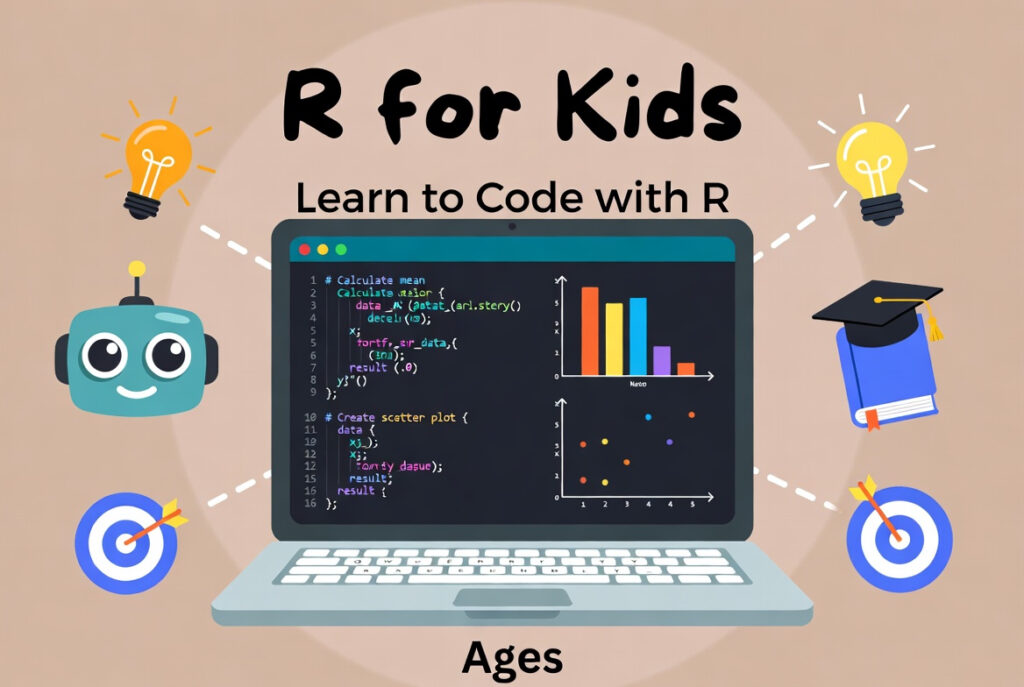
Next, kids use R to make charts. They create graphs with colors and shapes. As a result, data looks easy and interesting. Kids learn numbers through visuals and practice. Thus, R improves logic and thinking skills.
Future Skills and Smart Opportunities:
Finally, R helps build future skills early. Kids can later work on small freelancing projects. They can help with data reports and charts. Also, learning Python for Kids supports R learning. Hence, R opens doors to smart learning and earning.
Why Learn R Programming for Kids?
Builds Smart Thinking Early:
First, R improves logical thinking. Kids learn how to solve problems step by step. So, numbers and data feel easy. Also, it boosts confidence in learning coding. Therefore, kids think smarter every day.
Fun Learning with Real Data:
Next, R makes learning fun and visual. Kids create colorful charts and graphs. As a result, math becomes interesting. They enjoy learning through practice. Thus, learning feels like playtime.
Future Learning and Earning Skills:
Finally, R helps kids prepare for the future. They can grow into data and AI fields. Later, small freelancing tasks become possible. Also, Data Science course supports R skills. Hence, kids gain learning and earning power.
How to Learn R Programming for Kids?
Start with Simple Basics:
First, kids learn simple R commands. They understand variables and numbers. So, coding feels easy and friendly. Teachers explain concepts with examples. Thus, basics become strong quickly.
Learn by Doing Projects:
Next, kids practice with small projects. They create charts and mini data tasks. As a result, skills improve naturally. They learn by fixing small mistakes. Moreover, practice builds confidence.
Use Kid-Friendly Tools:
Finally, kids use simple R tools. They learn with visuals and guidance. Also, online classes make learning easy. Parents and teachers support practice. Hence, learning becomes smooth and fun.