jQuery Kids Course introduction
Learning jQuery in a Fun Way:
First, jQuery makes coding easy for kids. It helps control web pages with simple code. Kids learn to change text, colors, and images. So, websites become fun and interactive. Therefore, learning feels like playing.
Making Web Pages Interactive:
Next, jQuery adds actions to web pages. Kids create buttons, sliders, and animations. Moreover, they learn click and hover effects. It works well with HTML and CSS. Thus, creativity grows with coding skills.
Skills for Future and Freelancing:
Finally, jQuery builds strong web skills. Kids can combine it with HTML & CSS course. Later, they can create small websites. So, freelancing becomes possible in future. Hence, kids learn and earn with confidence.
Why Kids Should Learn jQuery?
Easy Start in Coding:
First, jQuery is simple to learn. Kids write less code and see fast results. So, they do not feel bored or confused. Moreover, learning feels fun and interactive. Therefore, interest in coding grows early.
Creative and Logical Thinking:
Next, jQuery boosts creativity. Kids create animations and effects easily. At the same time, logic skills improve. So, problem-solving becomes strong. Thus, kids think smart and creative.
Future Skills and Freelancing:
Finally, jQuery builds future-ready skills. It connects well with HTML and CSS course. Later, kids can make small websites. So, freelancing becomes an option in future. Hence, learning starts early for success.
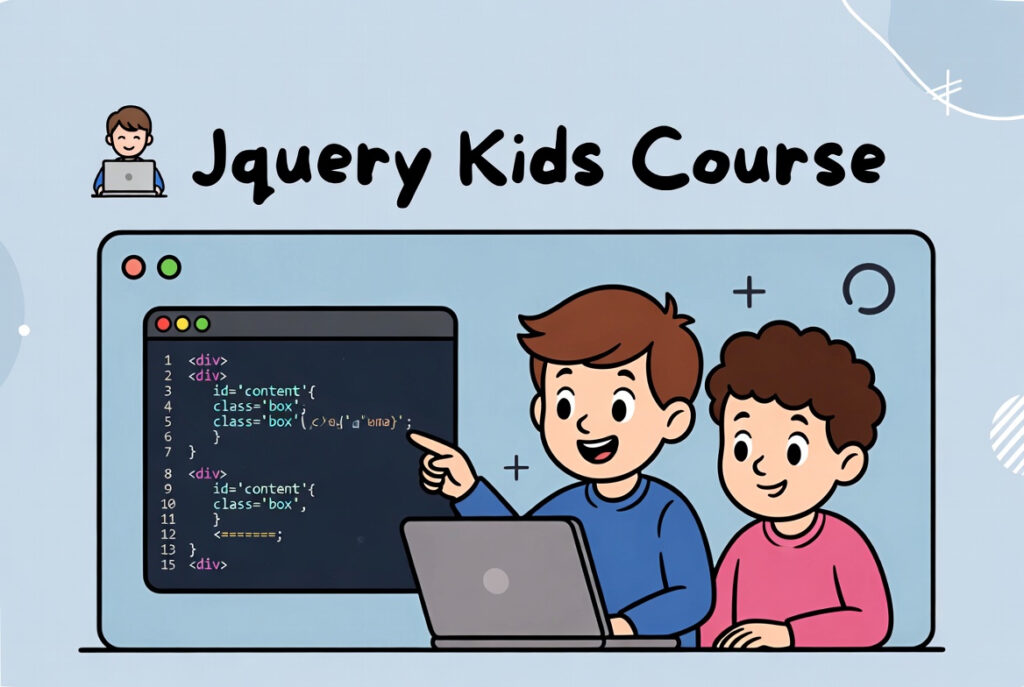
How Kids Can Learn jQuery?
Learn Basics Step by Step:
First, kids learn basic HTML and CSS. Then, they understand simple jQuery syntax. So, learning becomes smooth and easy. Moreover, lessons stay short and clear. Thus, confidence builds slowly.
Practice with Fun Projects:
Next, kids practice with small projects. They create buttons, games, and effects. As a result, concepts become clear. Also, mistakes turn into learning moments. So, skills improve with practice.
Combine with Other Web Courses:
Finally, kids mix jQuery with JavaScript basics. They also revise HTML and CSS regularly. This combination makes strong web developers. Later, they build real mini websites. Hence, learning becomes useful and practical.