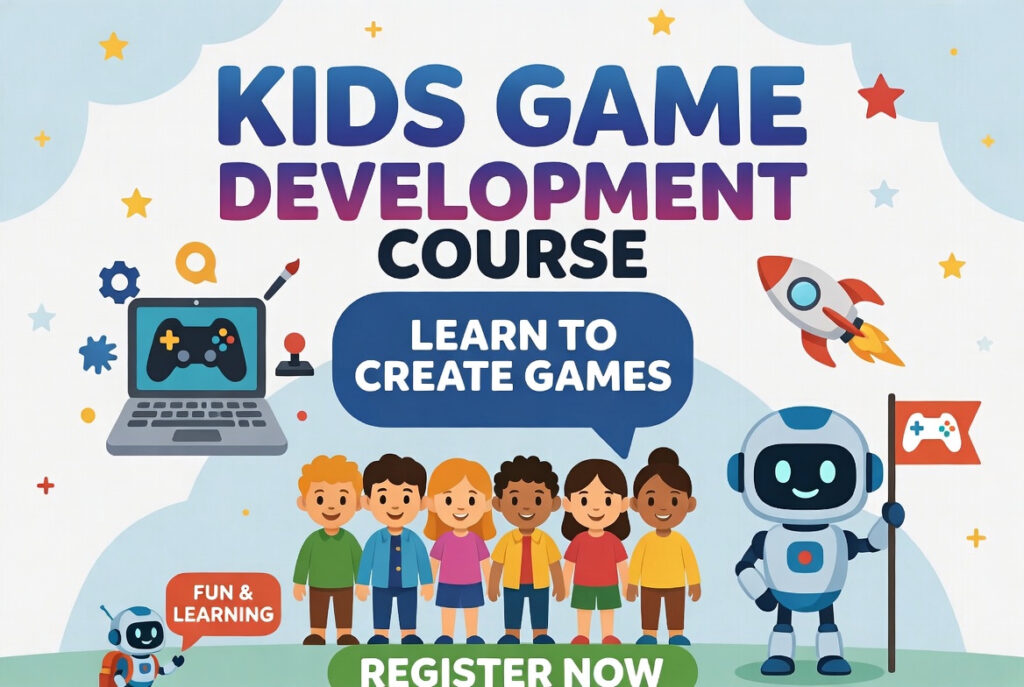
Game Development for Kids – Course Introduction
Learning Games Through Fun Coding:
First, kids learn Game Development in a fun way. They create simple games using easy tools. Then, they understand logic and creativity together. Moreover, coding feels like playing a game. So, learning becomes enjoyable and exciting.
Building Games with Creative Tools:
Next, kids use tools like Scratch and Unity basics. They design characters, levels, and actions. As a result, imagination turns into real games. Also, kids learn problem-solving skills. Thus, creativity grows with technology.
Future Skills and Freelancing Basics:
Finally, game development builds future-ready skills. Kids learn teamwork and project thinking early. Later, they can earn through small freelancing projects. Additionally, a Python coding course supports game logic. Hence, this course opens learning and earning paths.
Why Learn Game Development for Kids?
Boosts Creativity and Thinking:
First, game development improves creativity. Kids create stories, characters, and levels. So, imagination grows naturally. Moreover, kids think logically while playing. Thus, learning feels fun and easy.
Builds Strong Digital Skills Early:
Next, kids learn basic coding skills. They understand how games actually work. As a result, screen time becomes productive. Also, kids gain confidence with technology. Hence, digital skills grow from an early age.
Future Learning and Earning Path:
Finally, game skills help in future careers. Kids understand project and teamwork concepts. Later, they can try simple freelancing work. Additionally, skills support coding and AI courses. Therefore, learning creates long-term value.
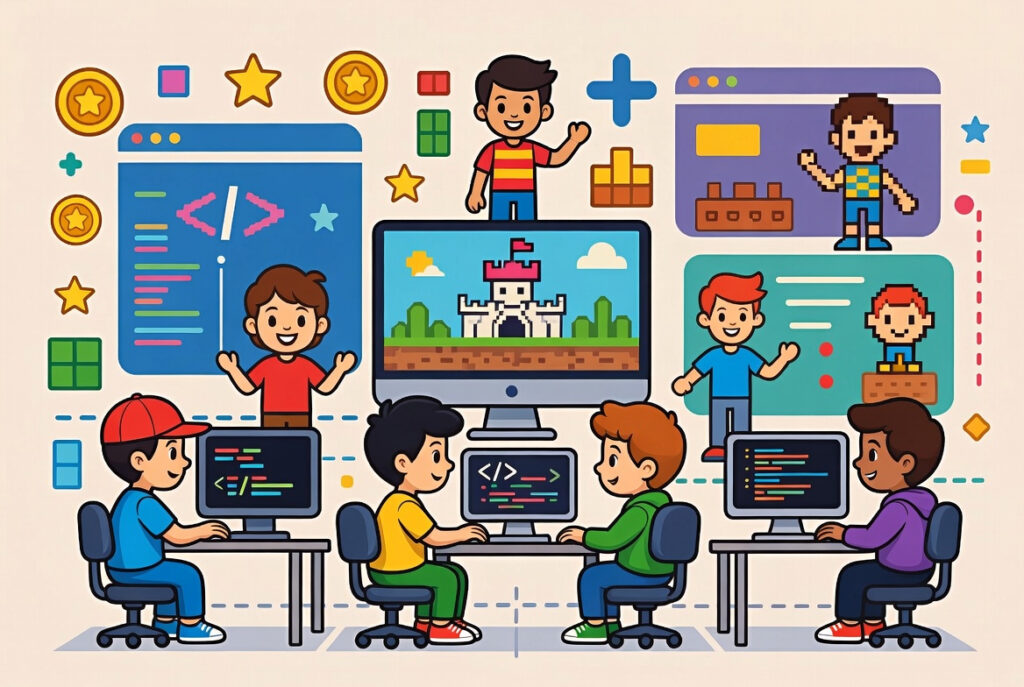
How to Learn Game Development for Kids?
Start with Beginner Game Tools:
First, kids start with Scratch coding. They drag, drop, and build games easily. So, no complex coding is required. Moreover, learning feels like playing. Thus, interest stays strong.
Learn Step by Step Game Logic:
Next, kids learn game rules and logic. They add scores, levels, and movements. As a result, thinking skills improve. Also, kids fix small errors themselves. Hence, problem-solving becomes natural.
Practice and Explore More Courses:
Finally, kids practice by making small games. They share games with friends and family. Later, they can explore Unity or Python courses. Also, basic freelancing ideas are introduced. Therefore, learning turns into real skills.