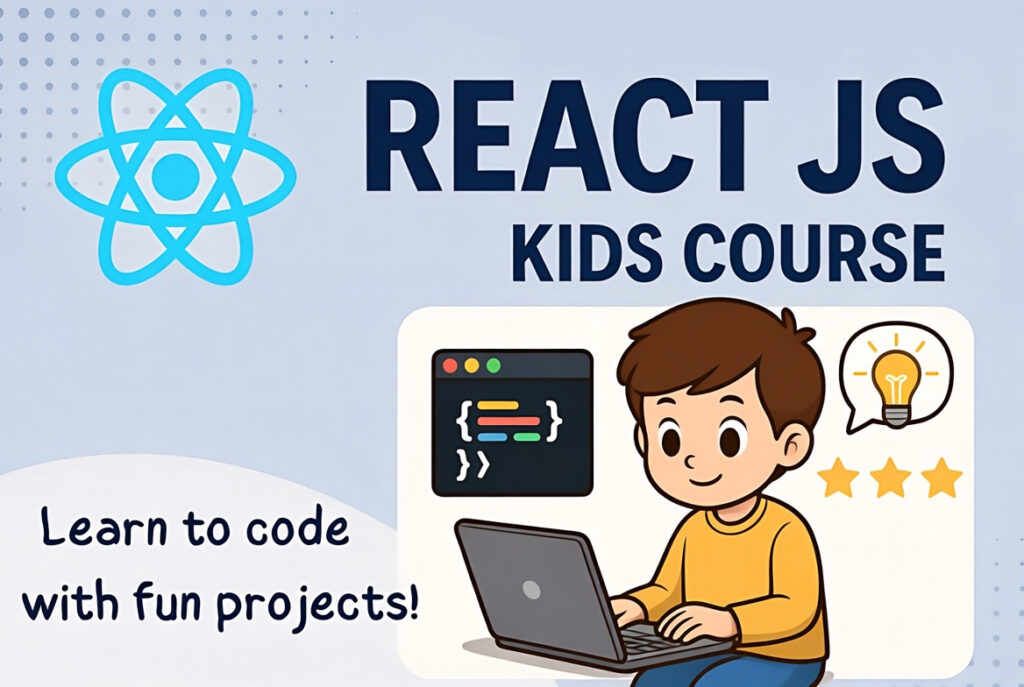
React JS Training for Kids – Course Introduction
Learning React JS in a Fun Way:
First, kids learn React JS step by step. They build small and colorful web pages. React helps create fast and interactive screens. So, kids enjoy coding without stress. Therefore, learning becomes fun and creative.
Building Simple Projects with React:
Next, kids create buttons, cards, and pages. They use components to reuse code easily. As a result, projects look like real apps. Kids feel confident by seeing live results. Thus, practice improves logic and thinking.
Skills for Future and Freelancing:
Finally, React JS builds future-ready skills. Kids learn teamwork and problem solving. Later, they can try small freelancing projects. Also, they can learn HTML & CSS course alongside. Hence, React opens learning and earning paths.
Why Learn React JS (For Kids)?
Builds Smart Thinking Skills:
First, React JS improves logical thinking. Kids learn how apps work step by step. They break big problems into small parts. So, thinking skills become stronger daily. Therefore, kids learn smart problem solving.
Helps in Future Careers:
Next, React JS is a popular skill. Many companies use React for websites. So, learning early gives a big advantage. Later, kids can earn through freelancing. Thus, React supports future career growth.
Fun Learning with Real Results:
Finally, kids see instant results on screen. They build real apps, not boring examples. This keeps learning fun and exciting. Kids feel proud of their projects. Hence, confidence grows naturally.
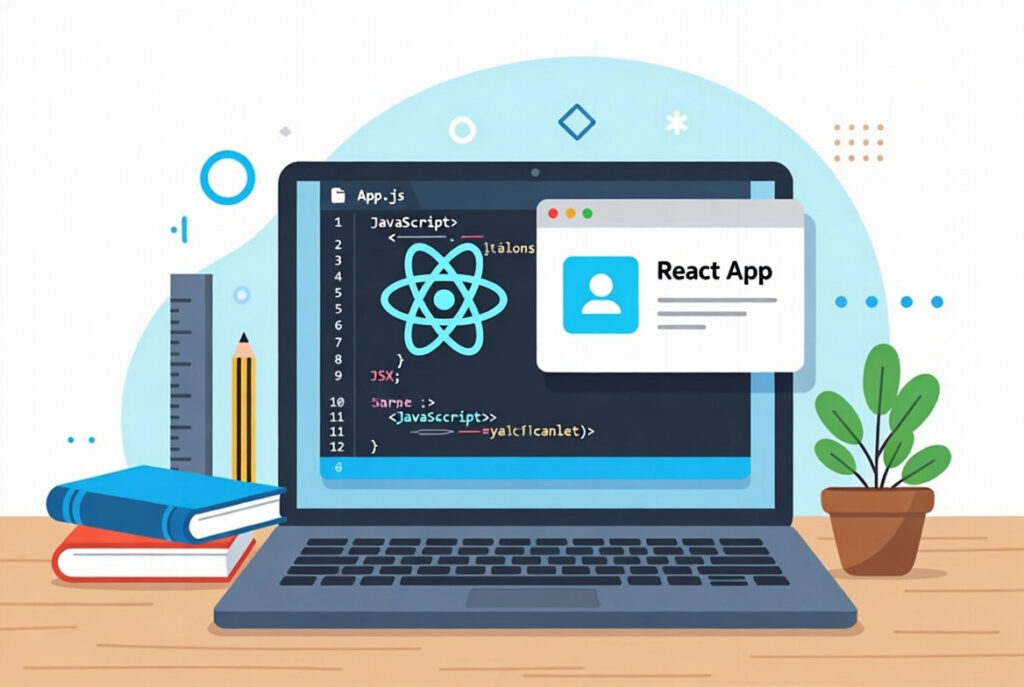
How to Learn React JS (For Kids)?
Start with Easy Web Basics:
First, kids learn HTML and CSS basics. They understand how web pages look. Then, they add simple JavaScript ideas. So, React becomes easy to understand. Thus, basics create a strong foundation.
Learn React Step by Step:
Next, kids learn components and props. They write small and simple code. They practice one concept at a time. As a result, learning stays stress-free. Moreover, skills grow slowly and clearly.
Practice with Fun Projects:
Finally, kids build games and mini apps. They create buttons, counters, and cards. Some projects can be shared online. Later, small freelancing tasks become possible. Hence, practice turns learning into skill.