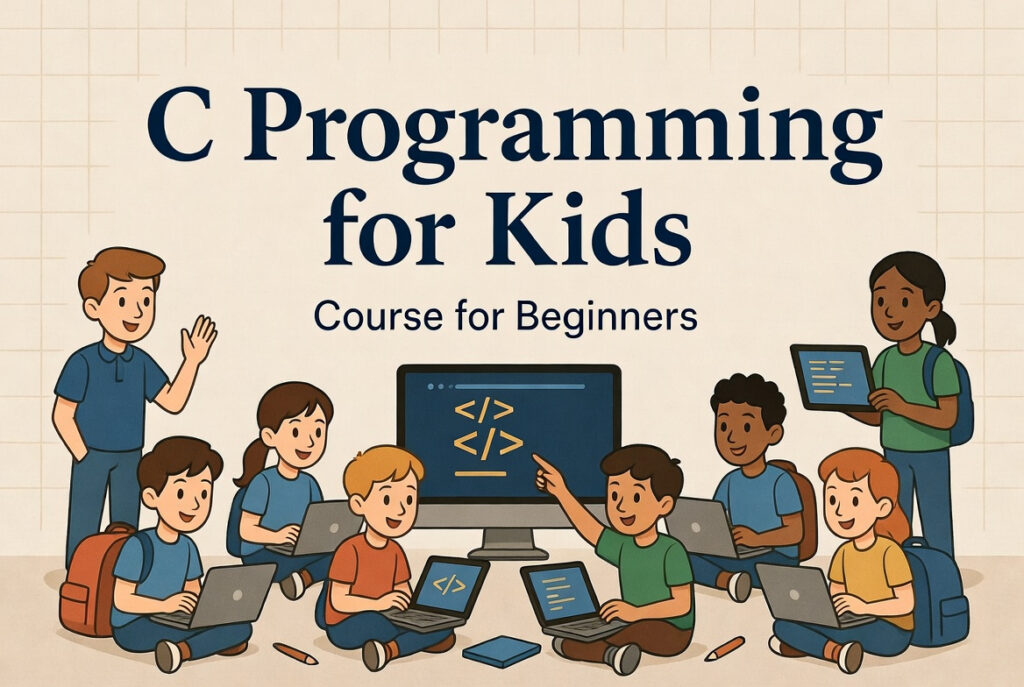
C Programming Kids Course introduction
What is C Programming?
First, C Programming is a basic coding language. Kids use C to learn how computers think. It teaches logic and problem-solving skills. So, children understand coding step by step. Therefore, C builds a strong foundation early.
Learning Logic with C Programs:
Next, kids write simple and fun programs. They learn loops, variables, and conditions easily. As a result, thinking skills improve quickly. Also, kids enjoy solving small coding tasks. Thus, learning becomes fun and interactive.
Future Skills and Creative Growth:
Finally, C helps kids grow confidence in coding. It prepares them for advanced courses like Python. Later, kids can create small projects independently. Moreover, basic freelancing skills start developing early. Hence, coding opens future learning and earning paths.
Why Learn C Programming for Kids?
Builds Strong Thinking Skills:
First, C programming improves logical thinking. Kids learn how to solve problems step by step. So, their brain starts thinking clearly. Moreover, it increases focus and patience. Therefore, learning becomes smart and fun.
Creates a Strong Coding Base:
Next, C is the base of many languages. Kids understand how programming really works. As a result, learning Python becomes easy later. Also, coding confidence grows from the start. Thus, kids feel proud of their skills.
Helps in Future Learning and Earning:
Finally, C opens many future learning paths. Kids can build small projects and games. Later, freelancing skills can develop slowly. Also, kids explore courses like Python Programming. Hence, coding supports future career growth.
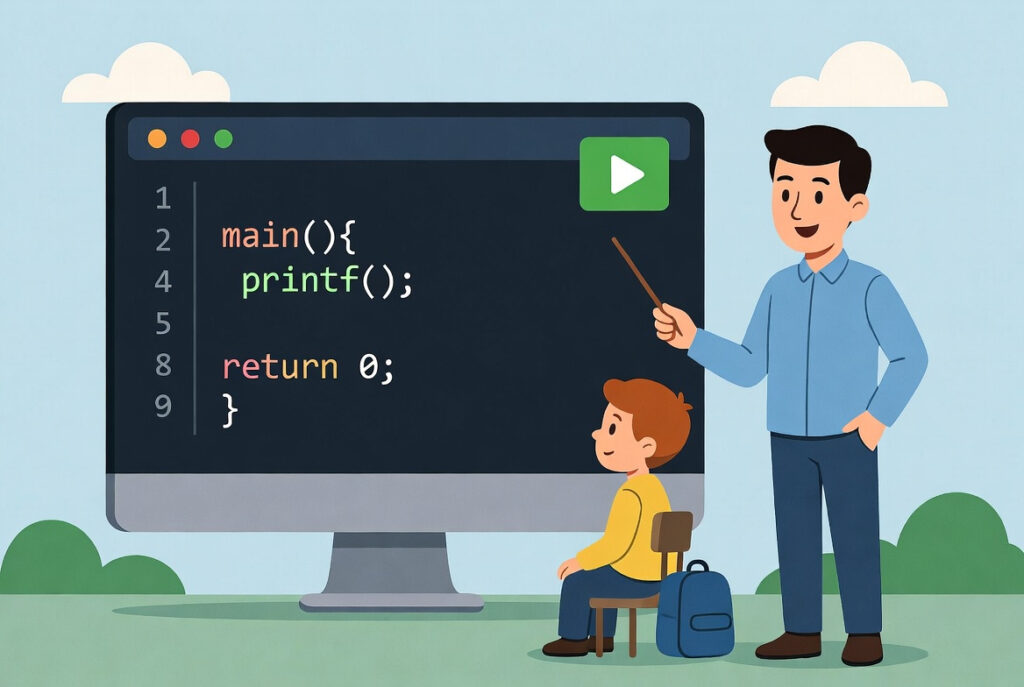
How to Learn C Programming for Kids?
Start with Simple Concepts:
First, kids learn what coding means. They understand commands in easy language. Then, they write very small programs. So, fear of coding goes away. Thus, learning feels comfortable.
Learn by Practice and Fun Tasks:
Next, kids practice daily with examples. They solve small puzzles using C code. As a result, learning becomes playful. Also, mistakes help them learn better. Therefore, practice builds confidence.
Move to Projects Step by Step:
Finally, kids create mini projects. They make calculators or simple games. Later, they learn basic freelancing ideas. Also, teachers guide them carefully. Hence, kids become future-ready coders.