
Applied Robotics Kids Course Introduction
Learning Robots Through Fun Activities:
First, this course introduces kids to robotics basics. Children learn by building small robots. They use sensors, motors, and simple circuits. So, learning becomes fun and interactive. As a result, kids enjoy technology early.
Hands-On Robotics and Logical Thinking:
Next, kids work on real robotics projects. They follow steps and solve small problems. This improves logical thinking and creativity. Moreover, teamwork skills grow naturally. Thus, children learn by doing, not memorizing.
Future Skills and Creative Opportunities:
Finally, applied robotics builds future-ready skills. Kids understand how machines work in real life. They also get early exposure to freelancing ideas. Later, they can create projects for small clients. Also, this course connects well with an IoT Basics course.
Why Learn Applied Robotics for Kids?
Strong Foundation for Future Skills:
First, robotics builds strong technical basics. Kids understand machines and smart systems. So, learning becomes practical and meaningful. Moreover, confidence grows at an early age. Thus, kids prepare for future technologies.
Boosts Creativity and Problem Solving:
Next, robotics improves creative thinking skills. Kids design, build, and test robots. They learn by fixing small mistakes. As a result, problem-solving becomes natural. Therefore, learning feels exciting and fun.
Early Exposure to Earning Skills:
Finally, robotics introduces real-world skills. Kids learn how projects work step by step. Later, they can try simple freelancing projects. They may create models for schools or events. Also, this course supports learning with a STEM Basics course.
How to Learn Applied Robotics for Kids?
Start with Simple Robotics Concepts:
First, kids learn basic robotics terms. They understand sensors, motors, and controllers. Then, they explore how robots move. So, concepts stay clear and easy. Thus, learning starts without pressure.
Learn Through Hands-On Projects:
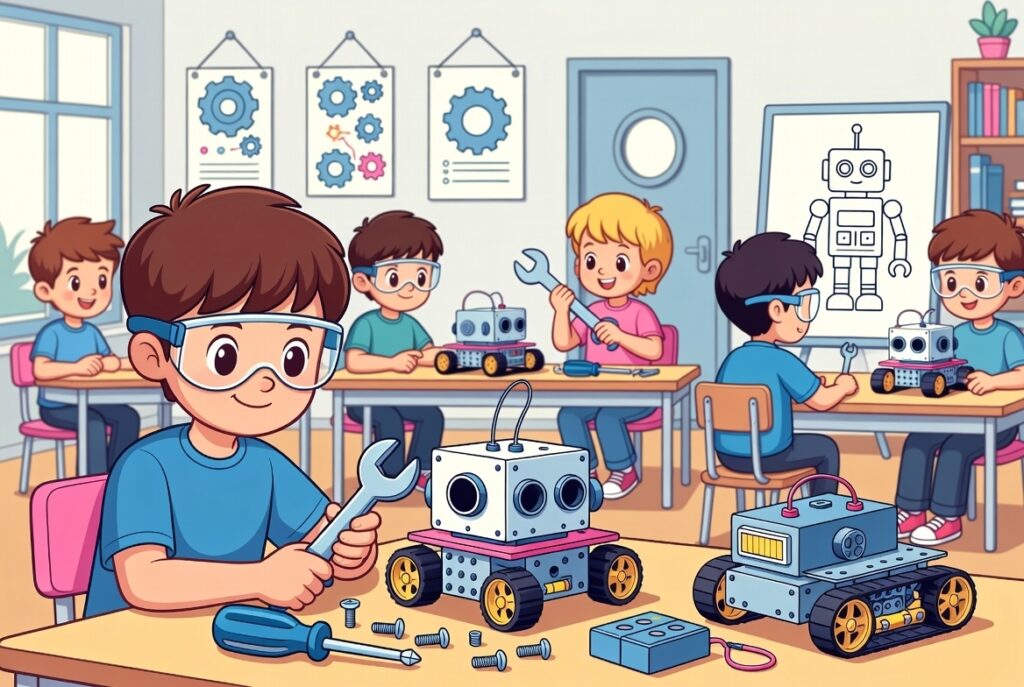
Next, kids build small robotics models. They connect parts and test movements. Mistakes help them learn better. As a result, confidence grows fast. Moreover, practice improves skills daily.
Apply Skills in Real Activities:
Finally, kids apply skills in mini projects. They participate in competitions or exhibitions. Some may even sell small projects later. This introduces freelancing ideas gently. Hence, robotics learning becomes useful and fun.